
Best Linktree Alternatives 2026
You've been sending people to your link in bio for months, and something still isn't clicking. Sure, the clicks are there, but the bookings, the sales, the "let's work together" DMs aren't showing up the way they should.
Linktree was fine when all you needed was a place to dump a few URLs, but a wall of plain links doesn't tell anyone who you are, what you do, or why they should choose you.
That's exactly why so many creators and small business owners are hunting for something better. In this post, I'll cover the best Linktree alternatives in 2026 — tools that go beyond a link list and actually include portfolios, booking, selling, and real branding, so your bio link can do the job of a website instead of just pointing to one.
Heads up: this post may contain affiliate links. In other words, if you make a purchase using my link, you won’t pay a dime more but I’ll earn a small commission. My chips and salsa fund thanks you from the bottom of its heart… er stomach?
Table of Contents
Why Look for a Linktree Alternative
Nowadays, trust is more important than ever. In a world where AI is everywhere, potential clients and customers crave genuine human connection. Not just potential clients. Brands looking for collaborations want to see the person behind the business.
And that's exactly where Linktree falls short.
Both brands and potential clients want to see your work, your services, and a little bit of your personality — not six blue hyperlinks stacked on top of each other.
Beyond that, there are a few other good reasons why you should consider a Linktree alternative:
Linktree gives you a link in bio page with heavy branding and limited customization on the free plan, with the best design options locked behind a paid tier
No portfolio or visual display — just links, with zero context for who you are or what you've done
No native booking, payments, or digital product sales, so you're stuck stitching together third-party tools just to take a payment or book a call
A generic, templated look—most Linktree pages feel very similar, with little more than different colors separating one from another.
Fees that add up — Linktree takes a cut on digital product and course sales (12% on the free plan, dropping to 9% on paid plans, and only reaching 0% on its top-tier plan)Paid plans can get expensive for what you actually get
If any of these sound familiar, here are the best alternatives — starting with the one that replaces Linktree and the five other tools you're probably also paying for.
The Best Linktree Alternatives in 2026
Here are the top picks, chosen based on features, value, and how much they actually help you convert visitors into clients or customers.
Quick Comparison: Linktree vs. Alternatives
Here's how each tool stacks up on the features that matter most.
| Tool | Portfolio Display | Booking | Sell Digital Products | 0% Fees | Visual Branding | Starting Price |
|---|---|---|---|---|---|---|
| Julip | Yes |
Yes (native, syncs to Google Calendar)
|
Yes | Yes | Yes | $19/mo |
| Linktree | No | Third-party only | Limited with fees | No (12% free, 9% paid, 0% top tier only) | Limited | Free |
| Beacons | No | Limited | Yes | No (9% on free plan) | Limited | Free (9% fee) or $10–$30/mo |
| StanStore | No | Limited | Yes | Yes (paid plans) | Limited | $29/mo |
| Carrd | Basic | No | No | N/A | Minimal | $19/year |
| Milkshake | No | No | No | N/A | Visual Cards | Free |
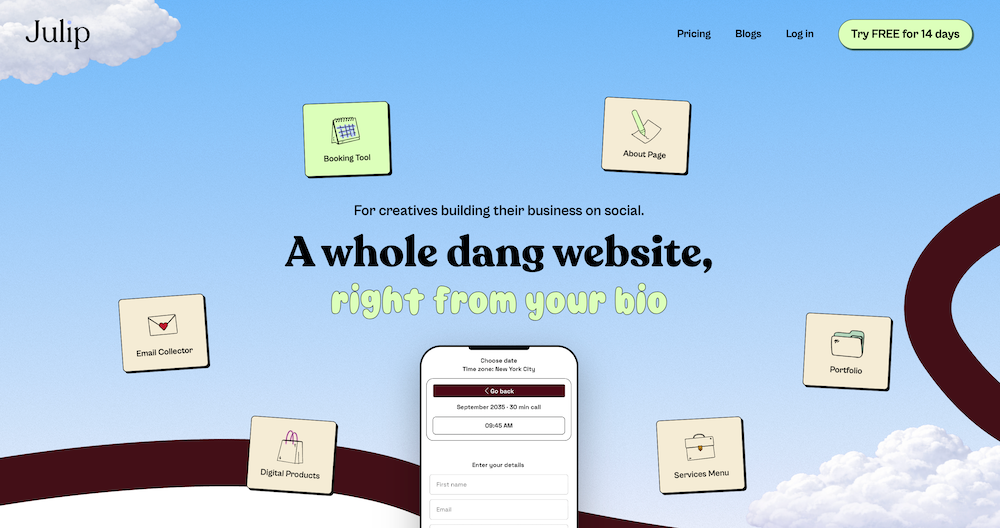
What it is: Julip is a visual website-in-bio — not just a list of links, but a full website that lives at your bio link. Portfolio, services, booking, digital products, email collection, and a visual storefront, all in one place. No hosting, no coding, no design experience needed. It's built for creators who grow on Instagram and TikTok and need their bio link to actually work for their business.
How it beats Linktree: Where Linktree shows links, Julip shows your work. Visitors land on a page that tells the full story — who you are, what you offer, examples of your work, and how to book or buy — without ever leaving your bio link.
Key features:Visual portfolio that auto-formats on any deviceNative booking for paid and free calls, synced directly to Google Calendar (no Calendly needed)Digital product and course sales with 0% platform feesServices menu with the option to book directly or send visitors to a sales pageAbout page with support for multiple sections, photos, and videoVisual storefront for affiliate links and Amazon storefronts — great for creators and marketersEmail collector, placeable on any page, with Zapier integration for Flodesk, ConvertKit, MailerLite, Mailchimp, ActiveCampaign, and moreTestimonials and FAQs displayed front and centerFull brand customization (colors, fonts) plus support for a custom domainAnalytics
Pros: Replaces Linktree, Calendly, a Canva-built portfolio, and a payment processor in one $19/mo plan. You keep 100% of your earnings. Layouts auto-adjust for both mobile and desktop. There's a 14-day free trial, and the average user saves roughly $228/year compared to paying for separate tools.
Cons: Julip is built for social-first creators, not as a full blogging or SEO-heavy content site. If you need a multi-page content hub with lots of blog posts, you'll want to pair it with a separate blog platform.
Pricing: $19/month billed annually, or $25/month billed monthly. 14-day free trial, no credit card required.
Best for: Creators, freelancers, social media managers, photographers, artists, and coaches — anyone who wants their bio link to actually function as a business hub instead of a glorified table of contents.
2. Beacons: Best for Creators Who Want Built-in Monetization
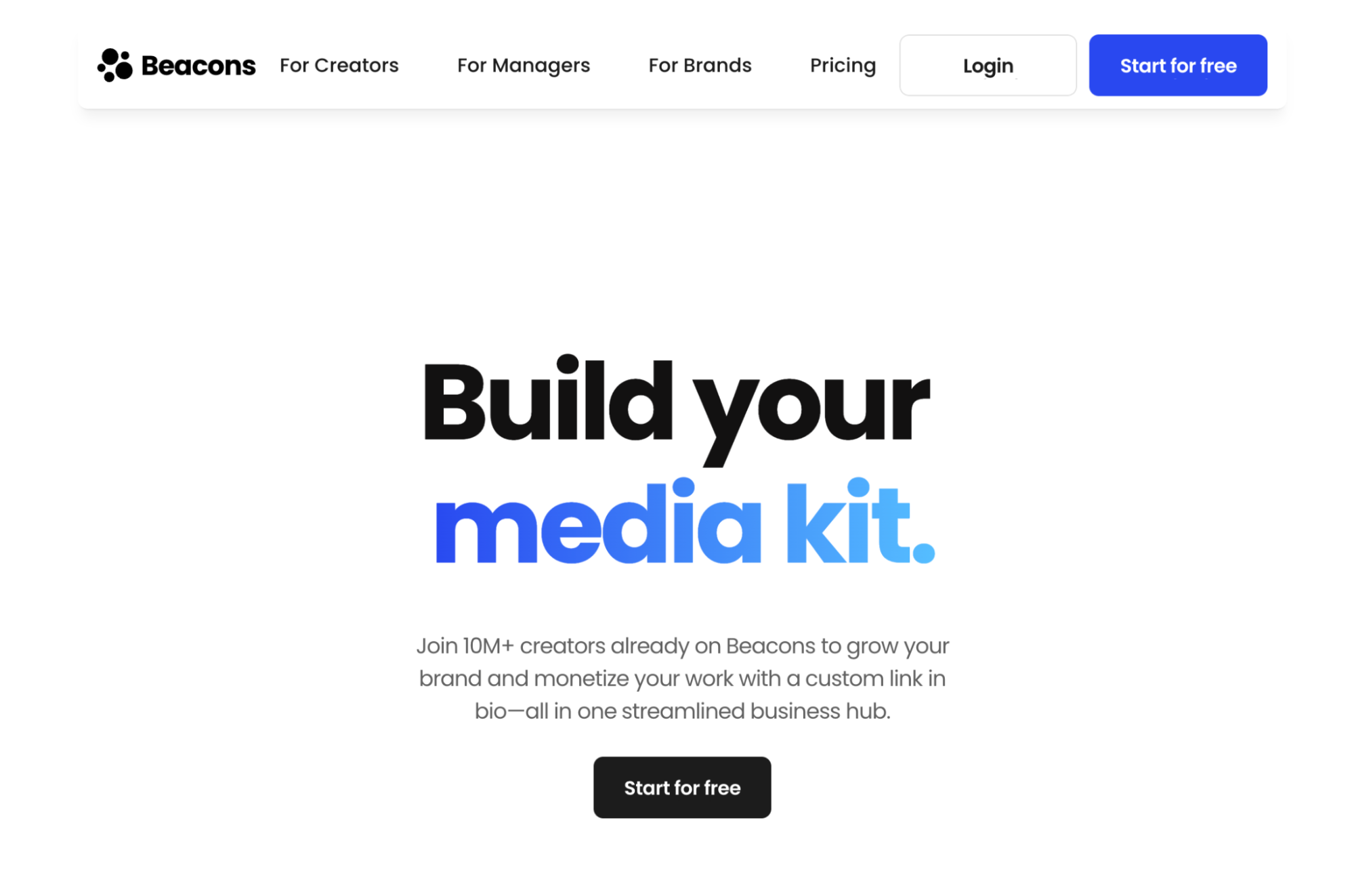
What it is: Beacons is a creator monetization platform with link-in-bio functionality built in. It supports digital products, tip jars, and brand deal management alongside a standard link page.
Pros: Good monetization tools, a usable free plan, and it's designed with content creators in mind.
Cons: Takes a 9% revenue cut on the free plan. Paid plans range from $10–$30/mo. It's also less visual than Julip — it still reads as a link page rather than a full website — and there's no built-in booking for creators who offer services.
Pricing: Free (with a 9% fee) or $10–$30/month.
Best for: Content creators focused on digital product sales and brand deals who don't need a portfolio or booking tools.
3. Stan Store: Best for Digital Product Sellers
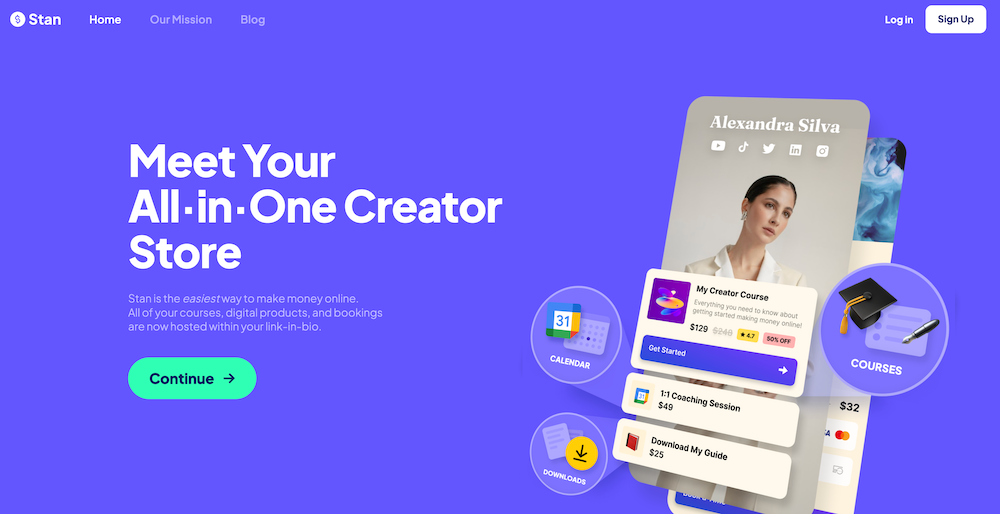
What it is: Stan Store is a link-in-bio tool built around selling digital products and courses. It's popular with coaches and online educators who want a simple storefront attached to their bio.
Pros: Clean product-selling flow, easy setup, built-in course hosting, and no transaction fees on paid plans.
Cons: More expensive at $29/month, with no portfolio or visual work display. Not well suited to service-based creators or artists who need to actually show their work.
Pricing: $29/month.
Best for: Online coaches, educators, and digital product sellers — less ideal for visual creatives.
4. Later (link in bio): Best for Scheduling-Focused Creators
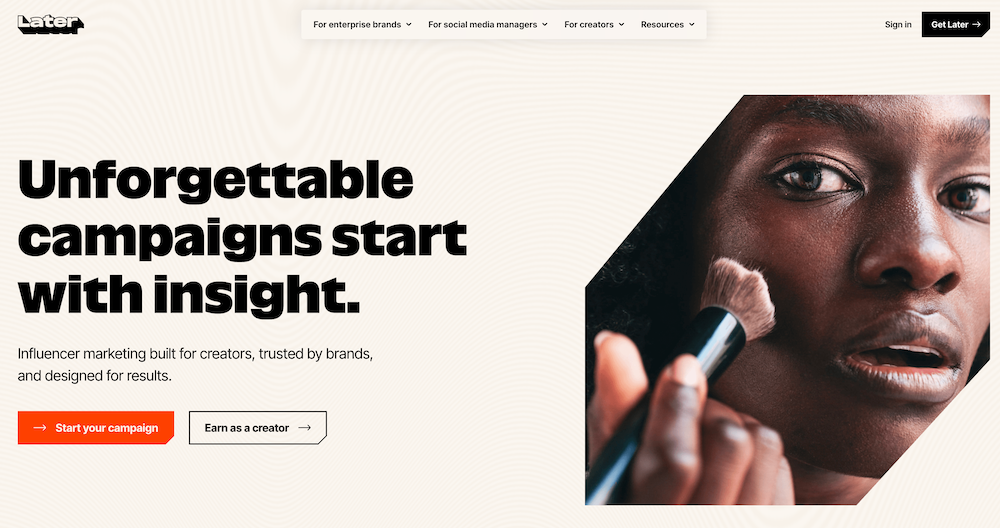
What it is:Later's link-in-bio tool builds a clickable grid version of your Instagram feed, linking each post to its own URL. It's tied directly to Later's scheduling platform.
Pros: If you're already using Later for scheduling, a feed-based link page feels native and requires almost no extra setup.
Cons: Requires a Later subscription. No booking, no product sales, and no about page. It only really works if your Instagram feed doubles as your portfolio.
Best for: Creators already using Later who want a quick bio link tied to their feed rather than a standalone business hub.
5. Carrd: Best for Minimalist Single-page Sites
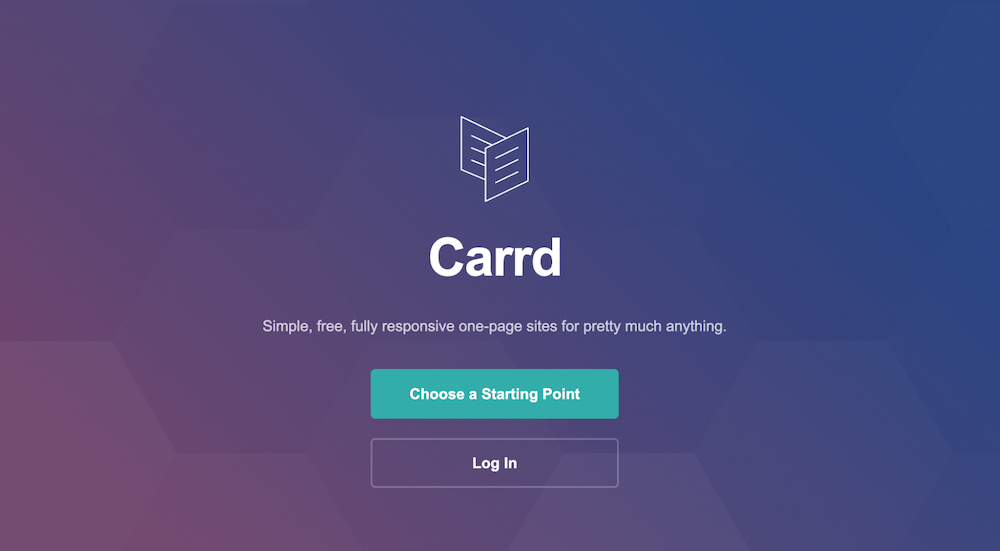
What it is: Carrd is a simple one-page website builder with a free plan. It's popular for basic portfolio or "about me" pages that go a step beyond a plain link list.
Pros: Very affordable (free plan, plus Pro starting at $19/year), clean and minimal, with a custom domain available on Pro.
Cons: No built-in booking, no digital product sales, no analytics, and generally very limited features. It looks fine, but it doesn't do much to convert visitors into clients.
Best for: People who want a minimal landing-page look on a near-zero budget and don't have immediate business goals attached to it.
6. Milkshake: Best for Instagram-only Mobile Users
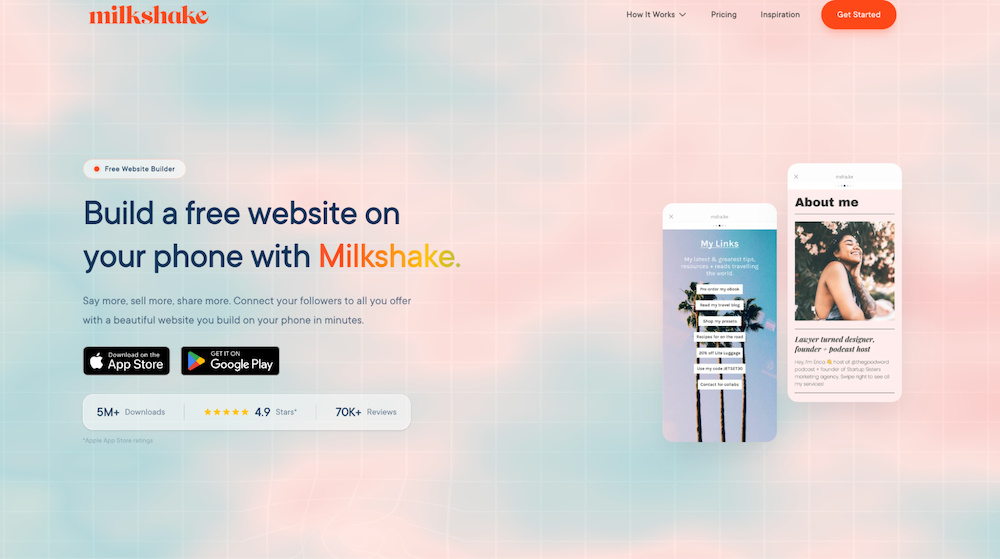
What it is: Milkshake is a mobile-only app that lets you build a simple, swipeable website straight from your phone. It's designed for Instagram creators who want something more visual than Linktree without ever opening a desktop.
Pros: Free, fast, visually appealing cards, and built entirely from your phone.
Cons: Very limited features — no booking, no selling, and no analytics on the free plan. It's more of an aesthetic upgrade over Linktree than an actual business tool.
Best for: Casual creators who want a prettier bio page with zero complexity.
Frequently Asked Questions About Linktree Alternatives
Is there a free Linktree alternative?
Yes — several tools offer free plans, including Carrd, Milkshake, and Beacons, though Beacons takes a 9% revenue cut on its free tier. Julip offers a 14-day free trial on its full feature set, which is the best way to test a proper business-ready free Linktree alternative before committing to anything.
What is better than Linktree?
For creators and freelancers who want to actually book clients and sell from their bio, Julip is the strongest upgrade. It includes everything Linktree offers — and adds a portfolio, booking, digital product sales, an about page, and a visual storefront, all at $19/month with 0% platform fees. If you're asking what's genuinely better than Linktree, this is it.
Can I use a Linktree alternative without a website?
Yes — tools like Julip, Beacons, and Stan Store are designed to replace the need for a separate website entirely. Julip in particular functions as a full website that lives at your bio link, so you get a portfolio, services page, and shop without buying a domain or dealing with hosting — though it does also support custom domains if you want that fully-branded feel.
Does Linktree take a percentage of sales?
Linktree's product and course sales come with a transaction fee that starts at 12% on the free plan, drops to 9% on paid plans, and only reaches 0% on its highest-tier plan. Most link-in-bio tools that support selling — like Beacons on its free plan — take a similar cut. Julip charges 0% on all sales, bookings, and digital products, so you keep everything you earn.
So, What's the Best Linktree Alternative?
For creators who want more than a list of links — especially those who book clients, sell their work, or run their whole business from social — Julip is the best Linktree alternative on this list. It's the only tool here that functions as a complete business hub from a single bio link, at a price that replaces several other subscriptions at once. If you're ready to turn your bio link into an actual website, start your 14-day free trial of Julip — no credit card required.
For more tips and tricks, check out these articles:


Tired of checking a million different websites for updates? follow.it lets you bring website updates, news, alerts, monitoring, and more into one place—so you can spend less time checking and more time actually doing things.